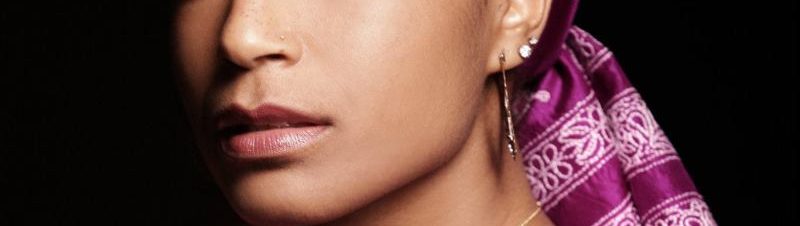
Ask ten Black Muslim women about their hijab and you will get eleven answers. One sister ties a high turban in mustard-yellow wax print. Another wears a long black khimar and has never once thought about matching it to her shoes. Another covers some days and not others, and is tired of people having opinions about that. Another took hers off years ago, and still prays, fasts and shows up for her community. All of them are part of our community, and all of their stories deserve room.
This is not a tutorial or a ruling. It is a reflection on the conversations that come up again and again whenever Black Muslim women talk about what we wear on our heads, and why.
A practice, not a uniform
For many Muslim women, hijab is an act of worship and a personal commitment to God. It is also more than a piece of fabric. Modesty in Islam is asked of men and women alike, and it lives in how we speak, how we carry ourselves and how we treat people, not only in what we wear. When the conversation shrinks hijab down to a dress code, it misses most of the point.
It also misses the women. Every sister is on her own road with her faith. Some have worn hijab since childhood. Some put it on as adults, after years of thinking it through. Some are converts still working out what fits their job, their family and their neighborhood. Nobody’s iman can be measured in yards of fabric, and nobody should be shamed in the masjid parking lot for how hers is tied.
Our wraps have a history
Black women wrapped their heads long before anyone called it a hijab trend. Across Africa, head wraps carry meaning: the Yoruba gele towering at a Nigerian wedding, the duku in Ghana, the doek in South Africa. A wrap can mark celebration, marriage, mourning or status, or it can simply be style.
In the Americas, the head wrap took on another layer. In 1786, Esteban Miró, the Spanish colonial governor of Louisiana, issued a decree requiring women of color in New Orleans to cover their hair with a head wrap known as a tignon. The rule was meant to mark them as lower in status. The women answered with bright fabrics and elaborate knots, and turned a rule meant to diminish them into a statement of beauty.
So when a Black Muslim woman ties a turban-style hijab, she is often drawing on two inheritances at once: the faith she practices and the wrapping traditions of her foremothers. That is something to be proud of.
The styles you will see
There is no single Black Muslim look, but a few styles come up again and again:
- The turban or head wrap. Bold, sculptural and rooted in African wrapping traditions. Some sisters wear it with a turtleneck or an under-layer to keep the neck covered; others wear it as it is. That choice belongs to the woman wearing it.
- The wrapped scarf. A long rectangular scarf pinned or draped around the face and over the chest. Endlessly adjustable, easy to dress up or down.
- The khimar. A longer, flowing covering that falls over the chest and shoulders, often in one solid color. Many African American Muslim women grew up seeing their mothers and aunties in it.
- The sports or slip-on hijab. Practical for the gym, the court, the lab or a long shift.
Fabric, color and the practical stuff
Style lives in the details. Jersey grips and often needs no pins, which makes it a favorite for busy days. Chiffon looks elegant but slides, so it usually needs an underscarf. Cotton and linen breathe in the summer heat. Silk and satin feel luxurious and are kind to hair, though they slip.
Then there is color. Wax prints, mud-cloth patterns, jewel tones and gold accessories show up in our wardrobes for a reason: they say who we are and where we come from. Other sisters prefer neutrals and let the face do the talking. Both are style.
A word about what is under the scarf. Black hair needs care, covered or not. Cotton can pull moisture from natural hair, so many sisters wear a satin or silk-lined cap underneath to cut down on friction and breakage. Tight buns and pins pulled hard against the edges, day after day, can lead to traction alopecia, hair loss caused by constant tension. Switch up your styles, keep things loose where you can and let your hair breathe at home.
When style meets the world
Black Muslim women get looked at twice. Black women’s hair has long been policed in schools and workplaces, and Muslim women’s coverings get questioned at airports, job interviews and gym doors. Wearing a wrap or a khimar can mean carrying both at once.
It helps to know your rights. In the United States, federal law requires most employers to make reasonable accommodations for religious practice, including religious dress, unless doing so would cause undue hardship. In 2015 the Supreme Court sided with a young Muslim woman who was turned down for a retail job because she wore a headscarf, in EEOC v. Abercrombie & Fitch. If you face pushback at work or school, write down what happened and when, and reach out to a civil rights organization or a lawyer.
Self-expression is allowed
Some people still talk as if caring about style makes a woman less sincere. We do not buy it. Taking care with how you present yourself can be its own kind of intention, a way of honoring the body and the life you were given. Choosing a scarf that makes you feel radiant on Eid, or tying a wrap that reminds you of your grandmother, is a joy, not a distraction.
At the same time, style should never become one more pressure. Nobody owes social media a perfect wrap. Some days the scarf goes on in thirty seconds and that is that. The goal is a covering that fits your faith, your body, your budget and your life, not someone else’s feed.
Making space for the girls
Young Black Muslim girls are watching how we talk about hijab, including what we say about other women. When they hear judgment, they learn that faith is a performance. When they hear warmth, they learn it is a relationship.
So let them explore. Let them try the turban and the khimar, the bright print and the plain black, and ask their questions out loud. A scarf-swap or wrap-tutorial night is one of the easiest themes for a sisterhood meetup, and conversations about identity and self-expression sit at the center of our mentorship circles. For a wider view of how Muslim women tell their own stories, read about the origins of Muslim Women’s Day.
However you wear it, or whether you wear it at all, wear your #BlackMuslimGirlFly with confidence. The crown was always yours.